
A Widower Becomes the Pope
Today in Papal History, a 13th-Century husband and father finds a lofty calling later in life

1265 A.D.
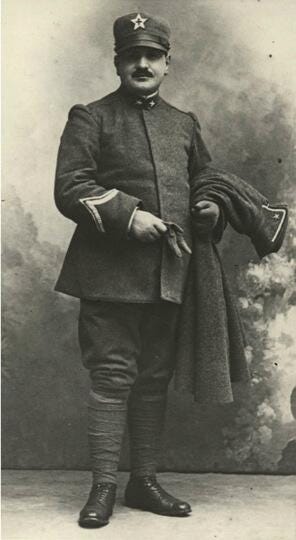
Guy Foulques was born in Saint-Gilles, on the southern border of modern-day France, on November 23, 1190 to Pierre Foulques, a successful lawyer, and his wife, Marguerite Ruffi. When he was 19, he joined up to fight the Islamic Moors in Spain, making him one of the only future popes to have been a soldier prior to ascending the Chair of St. Peter.
After his military service, he followed in his dad’s footsteps, studying law in Toulouse, Bourges, and Orleans, before becoming a secretary to the great King of France, St. Louis IX, who would later become a great influence in his elevation to the cardinalate.
At some point in his early life – perhaps even when Guy was still a teenager – his mother died, which prompted his father to leave his career and enter the Order of Carthusians as a monk, where he would live out the rest of his days.
Perhaps it was a bit of foreshadowing, because Guy was himself married and raised two daughters, after which history tells us only that his wife suffered an untimely death. However, we can safely assume that he lived the life of husband and father for many decades before the end of her journey here on earth, given that his ordination to the priesthood didn’t come until he was well into his 50s.
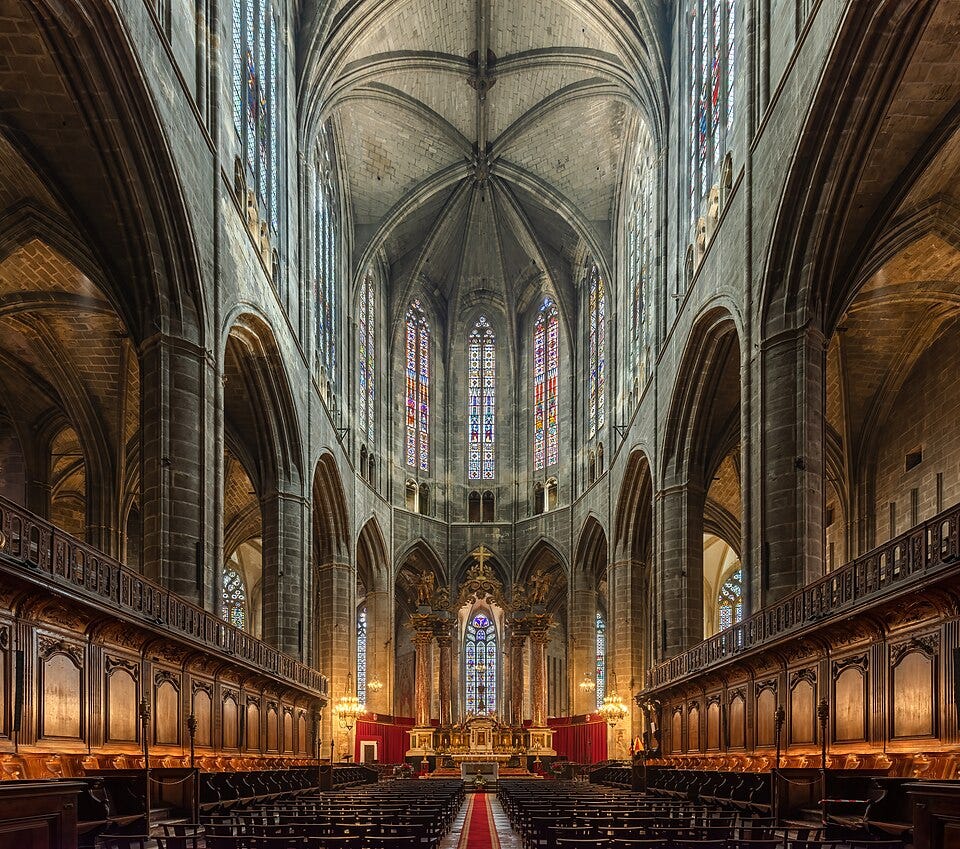
While his daughters both entered the convent as nuns, Guy once again followed his father’s example, devoting the rest of his life in services to the Church. He was ordained a priest in 1247, served for a time as pastor of the parish in which he was raised, and was made Bishop of Le Puy in 1257, when he was nearly 70 years old. He was then promoted to Archbishop of Narbonne two years later, made cardinal after two more years in 1261, and not long after was sent on mission to England, Wales, and Ireland as papal legate.
He was returning from England when Pope Urban IV died in 1264, so he incidentally was not a participant in the conclave that would eventually elect him. When he received a message from the cardinals, imagine his surprise upon arrival in Perugia, where the conclave was being held, when he was informed that the votes were done, and he was the man who had been chosen.
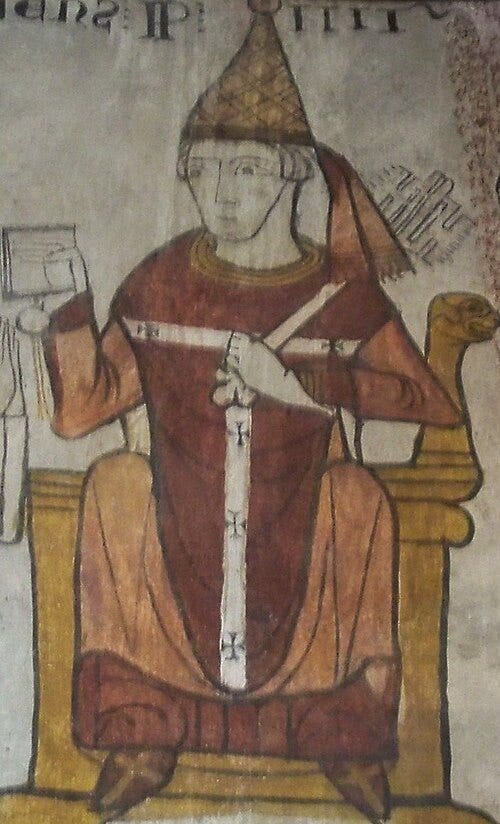
As the Catholic Encyclopedia recounts:
He was astonished; for only a man of his large experience could fully realize the responsibility of him whose judgment, at this critical juncture, must irrevocably shape the course of Italian and ecclesiastical history for centuries to come. His prayers and tears failing to move the cardinals, he reluctantly accepted the heavy burden
It was February 5 of 1265, and the new pope was nearly 75 years old.
Listen to the rest on the newest episode of The Popecast:
—
2006 A.D.
Twenty years ago today, Pope Benedict XVI spoke on the sanctity of all human life in his Sunday Angelus address:
Even before active initiatives, it is fundamental to foster a correct attitude towards the other: the culture of life is in fact based on attention to others without any forms of exclusion or discrimination. Every human life, as such, deserves and demands always to be defended and promoted. We are well aware that all too often this truth risks being opposed by the hedonism widespread in the so-called society of well-being: life is exalted as long as it is pleasurable, but there is a tendency to no longer respect it as soon as it is sick or handicapped. Based on deep love for every person it is possible instead to put into practice effective forms of service to life: to newborn life and to life marked by marginalization or suffering, especially in its terminal phase.
I really enjoyed listening to the podcast episode on this today!
What a remarkable story that challenges our assumptions about when life's "real work" begins. Guy Foulques starting his priesthood in his 50s and becoming pope at 75 shows how modern ideas about career timing are so limiting. I've been reflecting on how many peoples greatest contributions come after what society considers "retirement age," and this story is a perfect example. The detail about his father and both daughters entering religious life too adds such richness to understanding his own path. Stories like this help us see vocation as something that unfolds across a whole lifetime rather than getting locked in early.